
Habitat Development – Building home in Mars and Moon
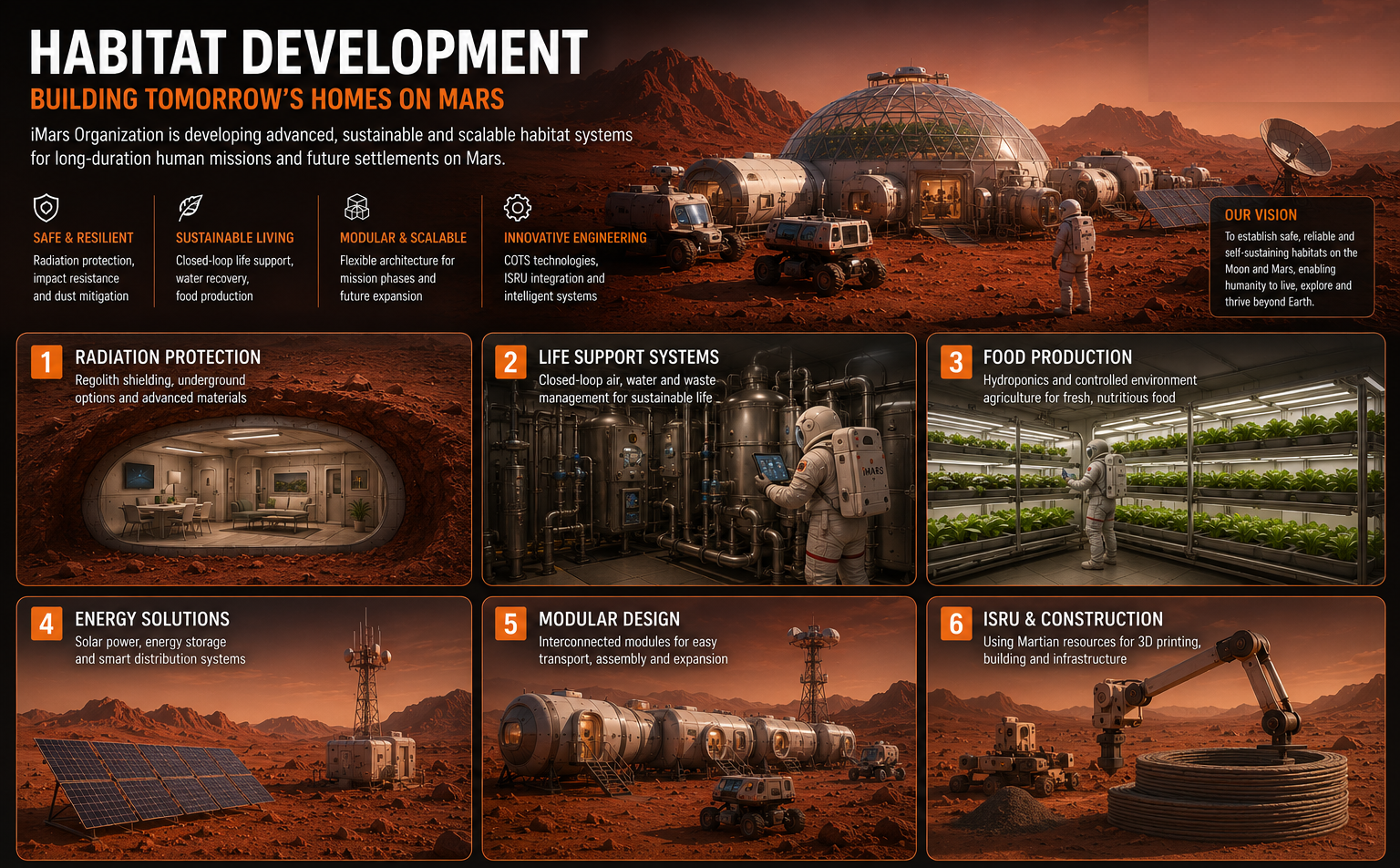
The iMars Organization is dedicated to the development of advanced habitat systems for sustainable human settlement on the Moon and Mars. As humanity moves toward long-duration space missions and permanent extraterrestrial presence, habitat development becomes one of the most critical pillars of space exploration. A habitat is not merely a shelter—it is a complete living ecosystem that must support human survival, safety, productivity, and long-term sustainability in some of the harshest environments known.
At iMars, our mission is to design, develop, test, and validate next-generation habitat systems that can support scientific missions, astronaut operations, industrial activities, and ultimately permanent human settlements beyond Earth. Our work focuses on both Moon Base and Mars Base development through innovative engineering, analogue testing, modular infrastructure, and in-situ resource utilization technologies.
Why Habitat Development Matters
Unlike Earth, the Moon and Mars present extreme environmental challenges that make human survival impossible without carefully engineered habitats. These include:
- Extreme temperature variations
- Vacuum or near-vacuum conditions (Moon)
- Thin atmosphere and low pressure (Mars)
- High radiation exposure
- Micrometeoroid impacts
- Dust and regolith contamination
- Limited access to water, oxygen, and food
- Communication delays and operational isolation
Habitats must therefore function as self-contained life-support ecosystems, providing breathable air, thermal regulation, radiation protection, food systems, water recovery, energy management, medical support, and safe working/living environments.
This is where iMars is building practical and scalable solutions.
Our Habitat Development Approach
iMars follows a unique engineering strategy based on:
1. COTS-Based Development (Commercial Off-The-Shelf)
Instead of relying entirely on expensive custom-built aerospace systems, iMars adopts a Commercial Off-The-Shelf (COTS) approach, utilizing proven industrial technologies and modular systems wherever possible. This significantly reduces development cost, shortens engineering cycles, and improves reliability through the use of field-tested components.
This approach enables faster prototyping, practical testing, and scalable deployment pathways for both government and private missions.
2. Modular and Expandable Habitat Architecture
Future Moon and Mars settlements will not begin as large cities—they will start as small, modular systems that grow over time.
Our habitats are designed using plug-and-play modular architecture, allowing:
- Easy transportation through existing launch systems
- In-orbit or surface assembly
- Expansion based on mission requirements
- Separation of critical systems for redundancy
- Robotic-assisted construction and deployment
Modules may include:
- Crew living quarters
- Laboratory modules
- Medical support units
- Food production chambers
- Energy and power units
- Airlock systems
- Radiation-shielded emergency shelters
- Storage and logistics modules
This creates a flexible and scalable settlement model.
3. In-Situ Resource Utilization (ISRU)
Transporting every construction material from Earth is not economically sustainable.
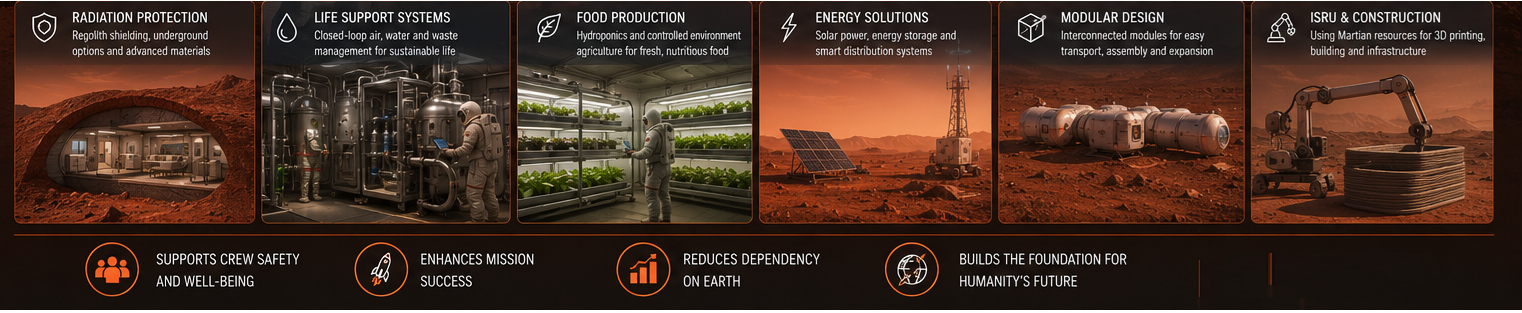
iMars integrates In-Situ Resource Utilization (ISRU) into habitat development by using local resources such as lunar and Martian regolith, subsurface ice, atmospheric gases, and solar energy.
Applications include:
- Regolith-based radiation shielding
- 3D-printed habitat walls
- Landing pads and surface roads
- Oxygen extraction from regolith
- Water recovery systems
- Thermal insulation using local materials
- Underground habitat construction concepts
This approach makes long-term settlement practical and sustainable.
Moon Habitat Development
The Moon serves as the first major step toward deep-space human settlement.
iMars is developing lunar habitat systems designed to survive:
- Extreme day-night temperature cycles
- High vacuum conditions
- Lunar dust exposure
- Radiation from solar and cosmic sources
- Reduced gravity operations
Key lunar habitat systems include:
- Inflatable and rigid habitat modules
- Dome-based surface habitats
- Regolith-covered radiation shelters
- Underground lava tube habitat concepts
- Pressurized rover integration
- Solar-powered life-support systems
- Closed-loop water and oxygen recovery
These systems are tested through the planned iMars Moon Analog Research Station.
Mars Habitat Development
Mars presents even greater complexity due to longer mission durations and permanent settlement requirements.
iMars is working on:
- Pressurized Mars habitat systems
- Long-duration life-support infrastructure
- Dust-resistant habitat sealing systems
- Thermal control for low-temperature operations
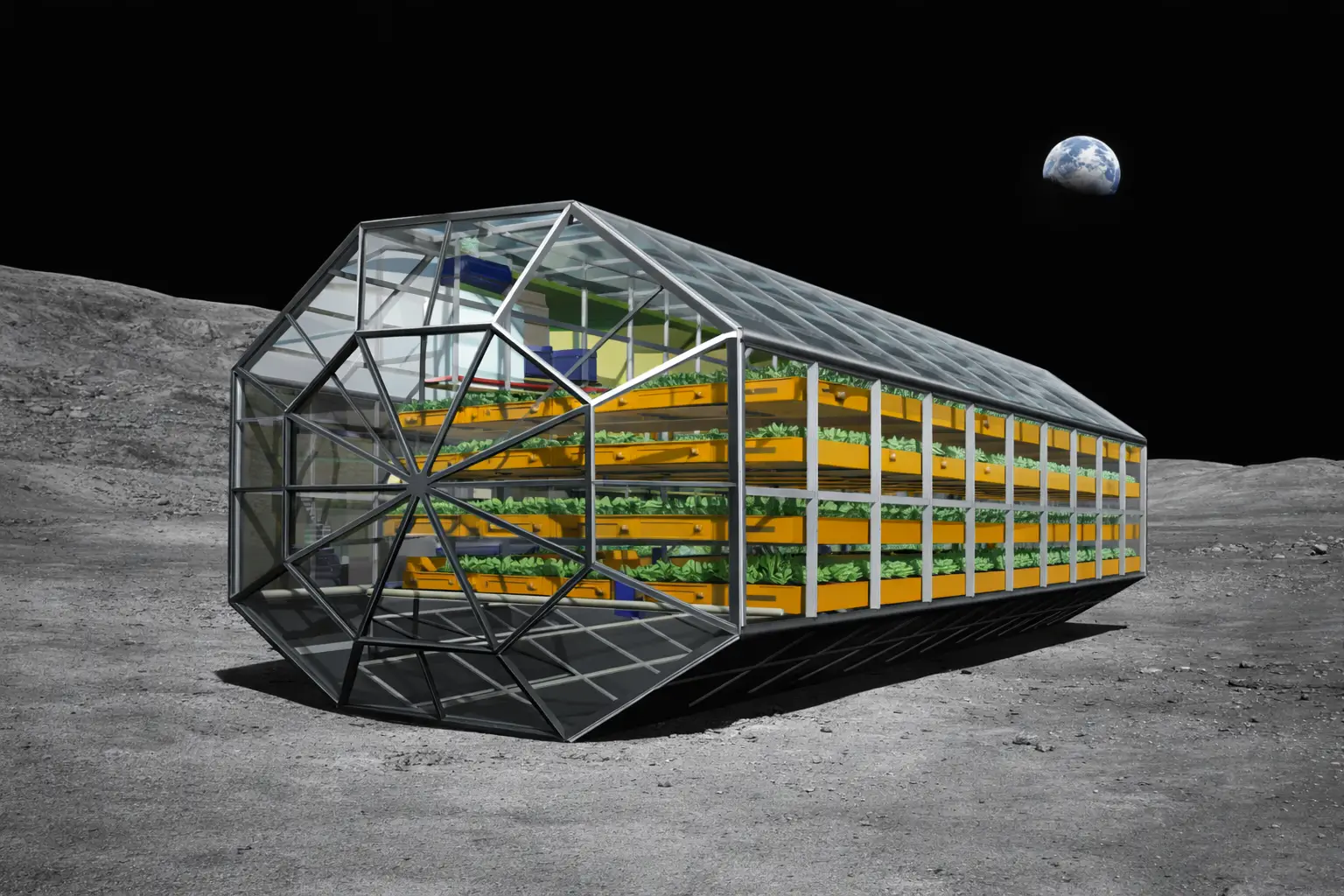
- Greenhouse and food production modules
- Emergency shelter systems
- Surface mobility integration
- Radiation-protected habitat clusters
- Autonomous robotic construction methods
A major initiative under this vision is I-MARS ARYA, planned near Bangalore, envisioned as India’s first dedicated Mars Analog Research Station.
This facility will simulate Martian temperature, atmospheric conditions, regolith behavior, lighting cycles, and operational constraints to test habitats before real deployment.
Habitat Testing Through Analog Research Stations
Before habitats can be deployed in space, they must be validated under realistic terrestrial simulations.
iMars is establishing:
Moon Analog Research Station
Mars Analog Research Station
These facilities allow testing of:
- Structural performance
- Airlock reliability
- Dust mitigation systems
- Thermal management
- Rover docking interfaces
- Human operations and crew simulation
- Habitat maintenance procedures
- Construction technologies
- Surface mission workflows
These analogue stations act as engineering testbeds and astronaut training platforms.
Collaboration and Innovation Ecosystem
Habitat development cannot be achieved by a single organization alone.
iMars promotes collaboration with:
- Universities
- Startups
- Research institutions
- Industry partners
- Space agencies
- Mars Society USA
- International analogue mission programs
- Citizen innovators and private space communities
This ecosystem accelerates innovation, improves technology validation, and builds a strong foundation for India’s role in future Moon and Mars settlement missions.
Our Vision
Our long-term vision is not just exploration—but permanent human civilization beyond Earth.
We believe that the future of humanity lies in becoming a multi-planetary species, and habitat development is the foundation of that future.
The iMars Organization is committed to transforming habitat concepts into practical engineering systems that support:
- Moon Bases
- Mars Bases
- Space analogue research stations
- Human settlement infrastructure
- Educational and scientific research platforms
- Commercial extraterrestrial operations
We are building not only habitats—but the future homes of humanity.
Request for Support
We invite industries, institutions, investors, philanthropists, research organizations, and visionaries to support this mission through:
- Financial assistance
- Strategic partnerships
- Technology collaboration
- Infrastructure development
- Research sponsorship
- Educational program support
Your contribution will directly support the development of next-generation habitat systems for the Moon and Mars and help shape humanity’s future beyond Earth.